Friday, April 13, 2007

migrants, labour relations, FTA

I was up early this morning (jet lag) and finally had a chance to update myself on some current issues, courtesy of the online English version of the Hankyoreh -- my favorite English resource on Korea these days.

Yeosu tragedy

First is a sad but biting story on the return of survivors of the Yeosu Fire to their home countries.

There was no one at the airport to see off the 17 wounded in the fire, leaving with their families two months after the conflagration. At that time, here were a large number of reporters covering the accident in Yeosu, but the situation was completely different on the surviving workers' final day in Korea. They still had wounds from the fire, and 10 million won (US$10,700) in compensation provided by the Korean government.
The migrants and their families held a 1.5 hour sit-in at the airport in order to get medical certificates to allow their re-entry. I don't think they were successful. The Korean government hurried to settle the incident, less than two months after it occurred. The workers, meanwhile, are still traumatized and injured: "I am suffering from nightmares and my hands shake uncontrollably. I have chronic, serious headaches and dizziness," said Park Cheol-yong, an ethnic Korean from China.

Of course, quickly packing the migrants back to their home countries with 10k will keep them out of the limelight in SK and make it more difficult to launch a systematic investigation or inquiry into the incident. One cynical bureaucrat simply told reporters that sending these migrants back was in the 'national interest', removing them at dawn from Yeosu the same day that a preparatory team for the World Expo 2012.

Labour Relations

Local groups are also complaining about the possibility of the OECD suspending labour monitoring in South Korea. It has been monitoring the labour situation there for 10 years now and the government wants it to stop, citing compliance with some of the OECD and ILO standards. However, groups complain that the situation is worsening and site an increase in imprisoned unionists as proof. Labour rights are also an issue with the FTA, and US democrats want to see the release of imprisoned unionists and a firmer commitment to labour rights included in the FTA. The writer also mentions that "if the government changes its position over the issues after renegotiations with the U.S., people will think the South Korean government easily yields under pressure from the US." Now I'm not sure if this is his opinion or if he is being merely descriptive, but I don't think labour issues are the ones that show that the SK government easily yields to pressure from the US. Funny that this concern wasn't always raised by the media on the concessions that Korea made in almost every single area of the agreement. Hmmmmm....

Anti-FTA groups lose funding

Finally, a story on the Ministry of Government and Home Affairs pressuring local governments to deny funding to NGOs that participated in Anti-FTA rallies. MOHAGA certainly loves to intervene in politics, as was witnessed by their crackdown against the Korean government employees union last fall -- one source of said concern by US dems cited above-- but, anyways, the ministry used participation at illegal rallies as their criteria for denying groups funding.

In response, civic activists said that given that nearly all rallies against the ROK-U.S. FTA have been arbitrarily declared illegal by the police, the government are apparently targeting the civic groups opposing the FTA.

Im Yeong-mi, an official at People's Coalition for Media Reform, said the new measure is targeting groups opposing the FTA with the U.S. "How can the Participatory Government restrict subsidies for the groups for expressing views different from those of the government?'' he said.

Here's the link.

Friday, April 06, 2007

in transit, slowish posting

I'm in the middle of a move (again) at the moment, so things may be a bit slow here until the 12th as I don't have reliable internet access and am busy with the move. I'll try to post more on some of the current debates over what to do with the FTA now that negotiations are over. Also, I've yet to post on the topic yet, but I was able to visit the Kaesong Industrial zone last month and have some long overdue reflections to post on that experience. Perhaps Matt will contribute some more posts till I get back...

More soon...

Monday, April 02, 2007

FTA deal reached, future of Korean capitalism

Well, the FTA negotiations are over, going to the last hour (US time) Monday night. Like we had predicted here, earlier, the exclusion of the rice market was the deal maker. However, reforms to the rice market were made before negotiations were even started and there are a number of different mechanisms under which this is already happening (APEC's Bogoi Target is one). Protests continued late into the night (Korean time) on Sunday, after the worst yellow dust storm this year. During the afternoon a taxi driver immolated himself in front of the Hyatt Hotel where the negotiations were taking place. The Hankyoreh has a little on this, but they date the incident as March 1st rather than April 1st -- either as a mistake or perhaps this happened twice.

The Korea times has a number of articles up on the FTA, this one outlines some of the 'give and take' in the negotiations, link. It's still not clear to me however, what happened to Investor-State Dispute mechanisms and GATS provisions over indirect expropriation that one normally sees in things like this. I'll keep reading to see what I can find. I'm sure this will come out over time. This Korea times article is also quite odd, celebrating, I take it, the opening of Korea to a more anglo-saxon model. Unfortunately, have a trade agreement (trade agreements are never free) with the US does not equate with having an entirely new economic model. Singapore, for example, has one with the US and they are still quite mercantalist (a look at the at the assets held by Temasek, a state-owned financial corporation from Singapore, should be enough to dispel that myth).

Anyways, there perhaps a case to be made that elements of stock market capitalism are making headways in South Korea, but one should be cautious here. The Chaebol system is still dominated by its core families and attempts to restructure it have not been effective. Chaebol system of not, Korean society is now starting to see some of the dynamics experienced from neoliberalism in other countries. This weeks news was noteworthy as it announced that Samsung will be moving the production of one of its more high tech chips to china, and STX shipbuilding is also building a 1 billion dollar plant there. I'm not sure if these are grounds for an argument about de-industrialization, but it is noteworthy.

I'm also curious about what the FTA will mean for Korean labour practices. The US Democrats scolded the Korean government just before the deal was reached. Whether or not this means that Korea will come up to ILO and OECD standards in its dealings with civil servant unions and union pluralism remains to be seen.

Tuesday, March 27, 2007

Irregular workers struggles in Ulsan


Last week I visited the industrial city of Ulsan. This was my first time visiting Ulsan, and I must say that I was quite surprised by the concentration of heavy industries there. On the approach to the city, one first passes a nuclear power plant, then for the next 10 minutes a variety of heavy chemical and petroleum processing plants. That's not all, either. Hyundai heavy industries, as well as automotive and shipbuilding are also there. One could describe it as a Hamilton on steroids (Hamilton is a famous industrial city in Canada near where I grew up -- now deindustrializing, I should mention) .

While I was there, I stopped by a local labour communications organization and they brought us to a sit-in struggle at a local technical college that had been going on for about 28 days. The sit-in was by irregular custodial and food service workers, 8 in total, had all worked for the college for 5-7 years but were all irregular workers, making, in some cases as little as a quarter of the regular monthly wage of the regular staff at the college, or $US 700 month compared to about $US 3000. Thus, the workers decided to form their own union -- I couldn't get the story straight as to whether or not they had tried to join an existing company union and were rejected (something was said to that effect, but a little bit got lost in the translation), or if they had simply tried to unionize their subcontracting firm; but, anyway, there seems to be a lot of these sorts of things going on so I wouldn't be surprised either way.

The school, however, decided to fire and rehire all the workers under a different subcontracting firm once they started getting organized. So, the workers demanded that since the school is really their employer it should start direct negotiations with the workers themselves and the workers started their sit-in.

The struggle is slowly starting to get more support. Kang Su Dol wrote a recent article (in Korean) on the Ulsan labour news site, and you can also read a poem about the struggle by the irregular workers union head Mi Hwa Won as well. Certainly, their struggle has been a hard one, with harassment from management and right wing students groups that have tried to kick them out. Similar stuggles by custodial workers in Kwangju have been met by violence as you can see from this video.

Unfortunately, this sort of struggle has not been getting the support it should from the organized sectors of the labour movement many of whom in recent years have opted for a more bread and butter unionism rather than broadly supporting struggles by the irregular and unemployed. However, it is the rights of these workers, as workers that are in effectively bound to a workplace but divorced of benefits, participation, and rights from it, that should be a major part of labour organizing. These struggles will not simply go away, especially as inequality increases and social welfare spending lags behind.

Monday, March 26, 2007

FTA negotiation's last days

It's hard to tell what will happen to the current negotiations over the FTA. Whatever the outcome, these are the last days of the negotiations. A deal needs to be made by the end of March. The Korean government says that rice negotiations will be the clincher but I've heard from many (from both industry and social movements) that a last minute deal there is possible. There are some other issues as well that could be deal stoppers, but I'm not too optimistic. Anyways, let's just wait and see.

Sunday's protest on the other hand was quite surprising. One, because the police allowed it -- mostly because of the negative publicity they received after beating up reporters and bystanders on March 10th, and perhaps because even some URI members attended this time. The march was also able to march into Gwanghwamun unobstructed, which was even more of a surprise. The picture below shows you a considerable crowd, of both protesters and police, amassed near Gwanghwamun and the US Embassy (thanks, Matt).


Thursday, March 22, 2007

worker ownership

good editorial in the Hankyoreh recently on some worker owned companies in the South. This is timely news as some Korean social movement groups are getting ready to ramp up their 'public character' (kong kong song?) or anti-privatization campaign. I think one could certainly argue that the companies discussed below are certainly examples of flexible services that benefit the public and also worth supporting... link

the author also ends the story with a slight quip at critics that is noteworthy as well:

It is only a thoroughly Anglo-American style of shareholder capitalism to claim that companies such as these are experiments that have already failed, and to worry primarily about the personal profit of corporate owners. Capitalism continues to make people in Korean society increasingly twisted, so labor-based management models are surely worth trying as a potential alternative.

Wednesday, March 14, 2007

Triangle Shirtwaist and the Yeosu Fire


Detail, History of the Needlecraft Industry (1938), by Ernest Fiene, High School of Fashion and Industry. A mural commissioned by the International Ladies Garment Workers Union (ILGW). [from New Deal Network]

I posted a short commentary on the Yeosu Fire, as well as the MTU petition, over at Interlocals the other day (link). I'll reprint some of it here. I think there are lot's of comparisons that can be made between the Yeosu and Triangle shirtwaist fire: especially the potential for immigrant based unionism and greater health and safety regulation. If you have your own comparisons as well, please post a comment.

More...

The Yeosu Fire: Korean Migrant's "Triangle Shirtwaist"

In the wake of a tragic fire that ripped through the Yeosu detention on February 11th, migrant's groups in Korea and internationally have been mobilizing to bring to light the injustices that surround migrant's lives in Korea and elsewhere.

According to an evolving media story, the reaction to the fire -- which killed 9 and injured scores more -- may have been just as deadly as the fire itself. An emergency protest rally shortly after the fire revealed some grisly testimony.

At the rally, as reported by Chamsesang news:

Hyeon-mo Choi, the representative of Human Rights for Migrant Workers pointed out the horrible condition of migrant workers in the detention centers. "One staff member and two police officers just sprayed fire extinguishers from the outside of the metal bars, and left the people inside. But the fire wasn't put out. While they went to the 1st floor to bring the keys, more people went dying." The Democratic Labor Party members said that they saw three patients handcuffed to their bed frames in the hospital after being saved from the fire. This shows that the Ministry of Justice keeps violating the human rights of migrant workers even after the disaster."


Recriminations and resignations are sure to follow in the weeks ahead, already arrest warrants have been sought for the security guards and attempts have been made to deflect responsibility onto the detainees themselves. But others wonder if warrants will be sought for those that permitted an 7 story detention center to be built with flammable materials and no sprinkler system.

There are perhaps some important correspondences here to the 1911 triangle shirtwaist fire in New York City, one of the largest industrial accidents in US history. That fire led to legislation requiring improved factory safety standards and helped spur the growth of the International Ladies' Garment Workers' Union, which fought for better working conditions for sweatshop workers in that industry.

The Yeosu fire brings with it a similar potential for better legislation, not just of detention centers, but of both the shady workplaces and ill designed migration policies that surround labour migration in South Korea, through which the Korean government keeps migrants in fear of public space through daily crackdowns and vulnerable to exploitation from their employers.

The Migrant Trade Union, who issued the petition included below, has fought for both the rights of migrant workers and for reform to the government's labour migration system. However, the MTU and its predecessor, the ETU, have consistently been denied a seat at the negotiating table by the Korean government which has in the past regarded it as an organization of the undocumented. That this taboo has been repeated by some charities and NGOs speaks to a real problem in recognizing migrants as agents of change rather than as simply victims.

This has all changed in the wake of the fire, however; both because of the vocal response by the MTU to the incident, and because of a recent landmark ruling by the Seoul High Court calling on the government to recognize the MTU and register it as a legal organization. With this legal hurdle removed the MTU will have greater liberty to engage the government and employers on their migration policies, and to advocate for wider social justice. There are certainly important parallels here with the Triangle Shirtwaist Fire and a sense that real change can be made in the coming years with migrant organizations in the forefront. However, this will depend not simply on how this important struggle unfolds, but also on the support it receives abroad.

Below is the MTU's petition on the Yeosu Fire:


Please take a moment to express your solidarity for the struggle of migrant workers in South Korea by going to this link.


Scroll down for the text of this petition and background on the Yeosu fire tragedy.


Justice for Yeosu Detention Center Fire Victims and All Migrant Workers

Summary of the Incident

At 4:00 am on February 11 a fire swept through the locked cells of the detention center at the Yeosu Immigration Controls Office, killing 9 detainees and wounding 18 others. Neither the alarm system nor the sprinklers operated when the fire broke out. The detention center staff tried but failed to put out the flames using portable fire extinguishers. Even so, they did not unlock cells to free the detainees. The detainees were forced to breathe in toxic fumes emitted from burning mattresses. These fumes were the cause of most of the deaths and injuries.

The cause of the fire is still under investigation. The South Korean government says it suspects arson by one detainee, but has not produced any evidence. Despite this alibi it is not hard to see that the real roots of the tragedy lie elsewhere- in the government's inhumane policy towards migrant workers.

Background on Migrant Workers in Korea

There are currently roughly 400 thousand migrant workers in South Korea, of whom about 189,000 are undocumented. Migrants in Korea have come under either the "Industrial Trainee System" or the "Employment Permit System," which place them at specific factories and prohibit them from freely moving to other jobs. Most migrant workers experience inhumane treatment, unsafe working environments and low and unpaid wages. Therefore, many must leave their assigned jobs in search of better conditions, thus becoming undocumented.

The government has responded to this situation with a brutal crackdown. Migrant workers are frequently injured and killed in surprise immigration raids. What is more, they face inhumane conditions and human rights abuses in detention centers like the one in Yeosu, which are worse than prisons. Migrants' organizations and their supporters believe that the only true way to solve the issue is to stop the crackdown, improve the migrant workers system and legalize all undocumented migrants.

Human Rights Abuses in the Aftermath of the Fire

Injured migrants have been forced to receive treatment while handcuffed to their hospital beds. 28 migrants who were deemed to need no treatment were transferred to Cheong-ju Detention Center. Of these, 17 were forcibly deported without begin given any compensation. The government is also refusing to reveal information about the case to bereaved families and civil society organizations.

Response

In response, MTU has come together with migrant and civil society organizations to form the 'Joint Committee for Counter Measures to the Tragic Fire at Yeosu Foreigners Detention Center.' We are working to raise awareness about the incident and its roots and investigating the actual conditions in detention centers around the country. We held a memorial service and mass rally on February 25, which was met by police violence.

Now more than ever, our struggle needs international support. The situation of migrant workers in South Korea must be familiar to all those who come from and/or work in immigrant working-class communities in throughout the world. Please show your solidarity by signing this petition to the South Korean government!

Petition

We, the undersigned, believe that to truly resolve this issue and ensure that such an incident does not happen in the future the South Korean government must comply with the following demands:

1. Full disclosure of the real causes and facts of the tragedy, punishment of those responsible, resignation of the Minister of Justice and compensation to the bereaved families.

2. Closure of all detention centers for their inhumane conditions and implementation of steps to revise the system.

3. An end to the brutal crackdowns and legalization of all migrant workers.

4. Institution of a system for the payment of back-wages and protection of migrant workers rights.

We want the South Korean government to know that this incident and the situation of migrant workers in South Korea have come to the attention of people around the world. The international community will not condone the human rights violations perpetrated by the South Korean government against people who work honestly and contribute to the Korean economy. Urgent action is needed.


NOTE to INTERNATIONAL LABOR, MIGRANT and HUMAN RIGHTS GROUPS

Greetings from the Seoul-Gyeonggi-Incheon Migrants Trade Union!

We are a union formed by and for migrant workers in South Korea. Our members come from many countries including Bangladesh, Nepal, the Philippines, the U.S., Indonesia and Sri Lanka. We are contacting you to ask for your solidarity in our struggle to improve the situation of migrant workers in Korea.

You may learn more about MTU and the situation of migrant workers in Korea by visiting our website at http://mtu.or.kr.

In the interest of building the global struggles for workers and migrants rights we would also like to learn about similar organizations and unions around the world. We believe this is the first step to establishing solidarity between us. Please take a moment to send us information about your work.

In solidarity,

Seoul-Gyeonggi-Incheon Migrants Trade Union

** This petition was initiated by Seoul-Gyeonggi-Incheon Migrants Trade Union and Nodutdol for Korean Community Development (Queens, NY)

Monday, March 12, 2007

VOP photos from int'l women's day


Here is a link to a photo report taken on International Women's Day from Minjung ui Sori (Voice of the People) in English. Enjoy (link)

Saturday, March 10, 2007

FTA's last round?

[UPDATE] Seems that Saturdays protests were blocked most of the day. I got a few phone calls from some at the march who played a game of cat and mouse with the police on the subway system as they tried to find a place to meet after their march was obstructed near Ehwa University. Eventually they made it downtown, as you can see in this video over at Pressian. Later, from a report I read earlier, it seems that some were water-cannoned, as it got darker, and colder, into the evening.

Well, another session of FTA talks have kicked off. As usual, protests are banned and the nation's highways are full of riot police blocking farmers from getting to Seoul (you can see the buses on the highways in this short newscast, link). Looks like this will be the final round. Why? Seems some last minute deals were made on agriculture that would allow the government to save face (Anti-FTA groups had seen this coming for months) and the only other institutional force that could have blocked the agreement, the prime-minister, has just stepped down -- and, no surprise here, pro-FTA former MOFE minister Han Duck-Soo has been appointed Prime Minister.

So it goes...

Friday, March 09, 2007

MTU Petition on Yeosu Fire -- older story from Chamsesang

Below, I'm posting a call for solidarity from the MTU, as well as an story from the Korean progressive media about the Yeosu fire and some of the reactions to it from local social movements. Enjoy.

Please take a moment to express your solidarity for the struggle of migrant workers in South Korea by going to this link.

** This petition was initiated by Seoul-Gyeonggi-Incheon Migrants Trade Union and Nodutdol for Korean Community Development (Queens, NY)

Justice for Yeosu Detention Center Fire Victims and All Migrant Workers

Summary of the Incident

At 4:00 am on February 11 a fire swept through the locked cells of the detention center at the Yeosu Immigration Controls Office, killing 9 detainees and wounding 18 others. Neither the alarm system nor the sprinklers operated when the fire broke out. The detention center staff tried but failed to put out the flames using portable fire extinguishers. Even so, they did not unlock cells to free the detainees. The detainees were forced to breathe in toxic fumes emitted from burning mattresses. These fumes were the cause of most of the deaths and injuries.

The cause of the fire is still under investigation. The South Korean government says it suspects arson by one detainee, but has not produced any evidence. Despite this alibi it is not hard to see that the real roots of the tragedy lie elsewhere- in the government’s inhumane policy towards migrant workers.

Background on Migrant Workers in Korea

There are currently roughly 400 thousand migrant workers in South Korea, of whom about 189,000 are undocumented. Migrants in Korea have come under either the “Industrial Trainee System” or the “Employment Permit System,” which place them at specific factories and prohibit them from freely moving to other jobs. Most migrant workers experience inhumane treatment, unsafe working environments and low and unpaid wages. Therefore, many must leave their assigned jobs in search of better conditions, thus becoming undocumented.

The government has responded to this situation with a brutal crackdown. Migrant workers are frequently injured and killed in surprise immigration raids. What is more, they face inhumane conditions and human rights abuses in detention centers like the one in Yeosu, which are worse than prisons. Migrants’ organizations and their supporters believe that the only true way to solve the issue is to stop the crackdown, improve the migrant workers system and legalize all undocumented migrants.

Human Rights Abuses in the Aftermath of the Fire

Injured migrants have been forced to receive treatment while handcuffed to their hospital beds. 28 migrants who were deemed to need no treatment were transferred to Cheong-ju Detention Center. Of these, 17 were forcibly deported without begin given any compensation. The government is also refusing to reveal information about the case to bereaved families and civil society organizations.

Response

In response, MTU has come together with migrant and civil society organizations to form the ‘Joint Committee for Counter Measures to the Tragic Fire at Yeosu Foreigners Detention Center.’ We are working to raise awareness about the incident and its roots and investigating the actual conditions in detention centers around the country. We held a memorial service and mass rally on February 25, which was met by police violence.

Now more than ever, our struggle needs international support. The situation of migrant workers in South Korea must be familiar to all those who come from and/or work in immigrant working-class communities in throughout the world. Please show your solidarity by signing this petition to the South Korean government!

Petition

We, the undersigned, believe that to truly resolve this issue and ensure that such an incident does not happen in the future the South Korean government must comply with the following demands:

1. Full disclosure of the real causes and facts of the tragedy, punishment of those responsible, resignation of the Minister of Justice and compensation to the bereaved families.

2. Closure of all detention centers for their inhumane conditions and implementation of steps to revise the system.

3. An end to the brutal crackdowns and legalization of all migrant workers.

4. Institution of a system for the payment of back-wages and protection of migrant workers rights.

We want the South Korean government to know that this incident and the situation of migrant workers in South Korea have come to the attention of people around the world. The international community will not condone the human rights violations perpetrated by the South Korean government against people who work honestly and contribute to the Korean economy. Urgent action is needed.


A Rally Denouncing the Ministry of Justice for the Fire in Yeosu Detention Center
"The Minister Must Resign! Close Down the Detention Centers!"

- Reporter Jeong-pil Byeon
Translated from Chamsesang (www.newscham.net)

A press conference and a rally on the recent fire in Yeosu Foreigners Detention Center was held in front of the government building in Gwacheon at 1 pm on February 13th. About 100 people, including migrant workers and human right groups, joined the rally.

The protesters expressed the mix of grief and fury that they felt about the incident. They severely criticized the government's wrong policy on migrant workers as the cause of the tragedy.

Speakers on stage also pointed out that it was a murder committed by the government, and that the foreigner detention centers, established for the protection of foreigners, are actually used to imprison them.

"Lots of migrant workers have hung themselves, run into trains, and jumped out of their windows. Now they are burnt to death.

Bong-hee Ju, the representative of the emergency committee said, "The government and the ministry are trying to dodge their responsibility for the tragedy. They just focus on who set the fire to lay the blame on the migrant workers."

Ju mentioned the recent court decision that judged that the migrant workers' trade union is legal. "I thought the situation of migrant workers in Korea could be better. But it was wrong. Still, lots of people hang themselves, run into trains, and jump out of their windows. Now they are burnt to death. We have to stop the tragedies, beginning at once."

"They just sprayed fire extinguishers from the outside of the metal bars and left the people inside."

Hyeon-mo Choi, the representative of Human Rights for Migrant Workers pointed out the horrible condition of migrant workers in the detention centers. "One staff member and two police officers just sprayed fire extinguishers from the outside of the metal bars, and left the people inside. But the fire wasn't put out. While they went to the 1st floor to bring the keys, more people went dying." The Democratic Labor Party members said that they saw three patients handcuffed to their bed frames in the hospital after being saved from the fire. This shows that the Ministry of Justice keeps violating the human rights of migrant workers even after the disaster."

"It's a shame to live in this country." "Even in the U.S., undocumented migrant workers are legalized regularly."

Young-guk Gweon from Lawyers for a Democratic Society criticized the government policy on migrant workers, and pointed out that Korean Immigration even violates their own rules and procedures. When they arrest a person, they have to identify the person first and show an arrest warrant. They are not allowed to sweep people up at random. He demanded the immediate abolition of iron-bar cells, an apology from the President, the resignation of the Minister of Justice and the punishment of the chief of Yeosu Detention Center. He added that the government should stop the crackdown and legalize undocumented migrant workers right now, taking the U.S. policy as an example: "Even under the U.S. policy, which is known to be strict on immigration, migrant workers with a five-year overstay regularly get a chance to be legalized."

Migrants go through a complete strip search. Arson is impossible.

Kajiman, the representative of the Migrant Workers' Trade Union, emphasized that the new Worker Permit System has intensified the crackdown on migrant workers, which is the more fundamental background of the tragedy. He was suspicious of the government investigators' argument of arson. He said that arson is almost impossible inside of the detention center because, before people are put in the detention center, they go through a thorough strip search. They are not even allowed to smoke. "The government and the Minster of Justice are responsible. Don't try to distract people from that. They must apologize to the migrant workers and suggest a fundamental solution."

The participants made it clear that the death was caused by the wrong system and policy on migrant workers. Then they demanded the shutdown of the detention centers, the resignation of the Minister of Justice and the punishment of the staff in charge. They also showed their will to struggle to stop crackdown and legalize all undocumented migrant workers. On February 25th, another large rally on the same issue will be held.

Translation : Radical Language Exchange
http://seoulidarity.net

Thursday, March 08, 2007

Arrests sought for the Yeosu fire

From the Joongang Ilbo:
South Jeolla police said yesterday that a detainee at the Yeosu Immigration Office set the fire [...], and sought arrest warrants for four security guards on charges of neglecting their duties. Police are investigating eight guards at the center who were on duty that night [...] The guards at the immigration center, operated by the Justice Ministry, did not properly watch the rooms and initially tried to keep the detainees inside the building, causing more deaths and injuries, police said.
Will it be mentioned that the Justice Ministry had the guards working 24 hour shifts, and that the fire took place at the end of that shift? Or will the guards be made to take all of the blame? While they seem to have acted irresponsibly, the system is what needs to be scrutinized, and not just the actions of the people employed within that system.

Also, as it said above, the police have determined that the man suspected all along must have set the fire, based on circumstantial evidence:
“Based on two lighters found at the site, testimony from detainees, and video clips from a security camera, we concluded that the Chinese man set the fire,” Mr. Kim said. [...] The Chinese man was prepared to escape, police said, as he wore many layers of clothes, including cotton pants, sweat pants and long underwear, and also had 130,000 won ($137) wrapped around his left ankle with a rubber band.
While the police could very well be right, the first things that popped into my head were the reports I'd heard about insufficient heating and blankets in the detainment centers, as well as simply asking if there would have been any better place to keep 130,000 won in a detainment center cell shared with 7 other people. I guess I'm not alone in those thoughts, as the KCTU held a press conference yesterday (in Korean) denouncing the police statement and asking the same questions.

While I'm at it, the photos related to the fire turned up by a search on naver can be found here.

Also, a commenter pointed out that the Seoul immigration website has a pop-up window reading, "At this time the Justice Ministry offers prayers for those who died in the Yeosu fire and prays for the quick recovery of the injured," which is the least they could do. Well, actually the least they could do is nothing, so I guess this is one step better. It's odd that there's nothing on the English language website, but then that kind of says something about their attitude towards foreigners anyways.

Speaking of which, the government has come up with new visa rules for ethnic Koreans from Russia, central Asia, and China, making it easier for them to work in Korea for up to five years, and allowing those who have overstayed their visas for less than a year elligible to apply:
The new visa rules are designed to help expand visa and job opportunities for ethnic Koreans from countries that have been relatively neglected compared to countries like the United States or Japan, and to ease labor shortages in low-wage jobs in small and medium-sized firms in South Korea. [...]

Mr. Kang said the expansion was aimed to help ethnic Koreans “who became illegal immigrants because of the complex procedures for getting a job under the previous visa rules.”
Y'know, there are a lot of people “who became illegal immigrants because of the complex procedures for getting a job”, but the government seems to be concerned only with helping those who are ethnic Koreans. Not to say that this isn't a good thing, as, of course, it was mostly Chinese citizens of Korean descent who died in Yeosu, and they are discriminated against to be sure (just watch Kim Dong-won's short documentary, "Jongno, Winter," about an ethnic Korean from China who froze to death in downtown Seoul in December, 2003, while waiting for unpaid wages), but the point is that people from many different countries have suffered under the current rules, not just ethnic Koreans.

On the topic of ethnic Koreans, the Hankyoreh has a story well worth reading about the discrimination North Korean refugees face living in South Korea (at the bottom of the page are links to other stories), which just goes to show the difficulty foreigners face, even when they're ethnic Koreans, when they try to fit into Korean society.


(Crossposted at Gusts of Popular Feeling)

Tuesday, March 06, 2007

Report on FTA in English

Here's the link to a copy of a report to (US) congress made by the alliance against the Korea-US Free Trade Agreement.

Monday, March 05, 2007

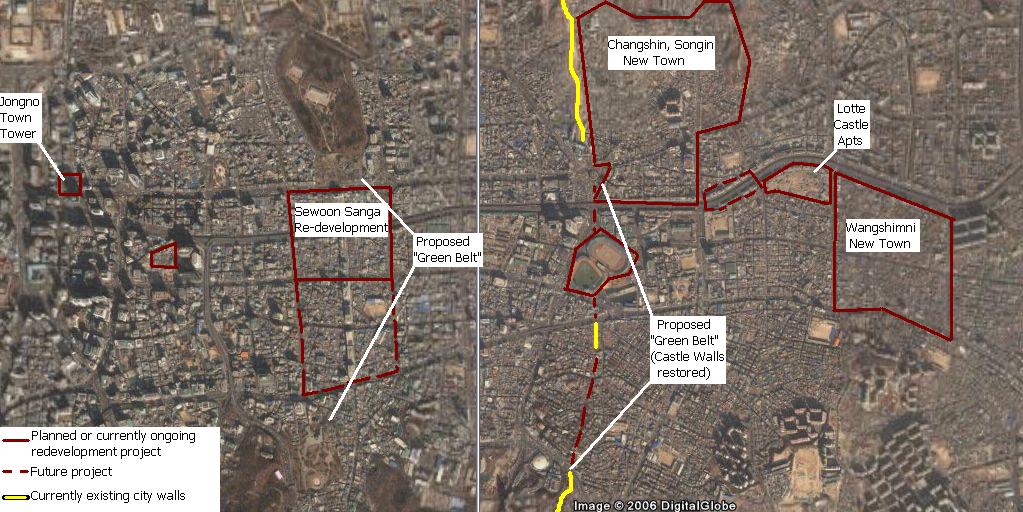
A new way to protest redevelopment

The Joongang Ilbo had an interesting article yesterday titled "3 sickened by yogurt handed out to residents":
Police arrested a 32-year-old man last night who they said injected detergent into 60 containers of yogurt that he handed out to residents of a town in southern Seoul that will be redeveloped. Three people who ate the yogurt were briefly hospitalized and released this week for nausea and dizziness, police said yesterday.

Between two and four containers of yogurt were each unexpectedly delivered to about 30 households in the town on Tuesday, police said. The residents found a small hole in the containers, which they believed was caused by a needle, and reported it to police.

“I was angry because the residents there are going to make big money on the redevelopment project while my mother has to live on peddling fruit in an outdoor market,” police said the man told them. He is not employed. The man’s mother lives in a village adjacent to Munjeong 2-dong.
According to the Korean language article, the suspect, Mr. Seon, lives alone in Changshin-dong, (which itself is about to become redeveloped into a new town), while his mother works in Garak market, one stop north of Munjeong station. The Joongang's English article is a bit confusing, but the point is that his mother lives in a nearby area which won't be redeveloped.
Recently the town was designated as the new home of the offices of the Seoul Eastern District Prosecutors’ Office and the Seoul Eastern District Court, now both located in Gwangjin District. The move is expected in around 2010.
The decision to make this move came back in May, 2005, though the previous September plans had been made to move merchants displaced by the Cheonggyecheon redevelopment to be moved to the same area. Obviously the plans were cancelled (really, could they have found a more remote place to try to move them to?).


Munjeong-dong is several kilometers south of Olympic Park, and the map above shows the area to be redeveloped, the market where the man's mother lived, and the town to be redeveloped, known as 'Gaemi Maeul' ("ant village"). The article describes this village:
The town consists of 95 households in black vinyl homes near giant apartment complexes, police said. The residents, mostly the elderly and people with low incomes, moved there beginning in the late 1980s.

Above is a closer view of the village. To get a better view, this short video (a news clip) shows them briefly, while this post by Antti over at Hunjangûi karûch'im tells more about such 'vinyl houses' (converted greenhouses - notice that the village is surrounded by a field of greenhouses put to agriculture use). Antti also links to a lengthy report about the history of vinyl houses, which is well worth the taking the time to read. The name Gaemi Maeul (interesting translation here) is also used to refer to other, older (though not made of vinyl houses) neighbourhoods in Seoul, such as the ones pictured here (said to be from Geoyeo-dong and Hongje-dong) and here. The Gaemi Maeul mentioned in this article would seem to be the same one pictured above. The Joongang article continued:
“Although compensation for the residents has not been set, residents are expecting to receive money to move to other places or the right to live in low-rent apartments,” said an official at Munjeong 2-dong office.
I'm not sure how much policy has changed towards these communities since the report I linked to above was written (in 2002), but as of that time, despite most districts having rules to demolish such structures, Songpa-gu was the only district to allow people living in such communities to register their residence, which made it much more likely that they would receive compensation in the event of redevelopment. While those championing the right to affordable housing would cheer Songpa-gu's decision, the man who distributed the tainted yogurt obviously didn't feel the same way.


(Crossposted at Gusts of Popular Feeling (Do read this comment))

Sunday, March 04, 2007

The Continuing Reactions to the Yeosu Fire

'Demanding Justice' - Seoul Station, February 25, 2007


I've already written one update about the Yeosu immigration center fire which left 9 migrant workers dead and 18 injured. Here begins another, because, as I anticipated, there has been a lot of ink spilled on this topic over the past two weeks.

To start off, for a background on the migration of foreign workers here, an essay titled "Past and Present of Foreign Workers in Korea 1987-2000" can be downloaded here.

The Migrant Trade Union and others released a statement on February 11, the day of the fire, titled "How Many More Times," which can be read here. A petition related to the fire can be found here.

Different newspapers have covered the tragedy and response to it in varying ways. The Joongang Ilbo had an article titled "Fire might have been a planned escape" on February 14, but more interesting are a February 16 letter to the editor( "Tragedy at Yeosu should shame Korea") by a student at Ewha Girl’s Foreign Language High School, and a February 26 opinion piece titled "Korea needs to start welcoming immigrants", by Gouranga Gopal Das, a professor of economics at Hanyang University.

The Joongang also covered a February 23 press conference by migrant worker organizations in the article "Migrant workers collective demands changes in policy."
Eight migrant worker organizations held a press conference yesterday[feb 23] at the Press Center and demanded that the cause of the recent deadly fire at the customs and immigration office in Yeosu be established. They also asked that such facilities be abolished.

In a joint statement the organizations said, “This problem transcends the issue of those killed in the Yeosu fire, it is the problem of 200,000 unregistered immigrants. We are anxious that this might happen again.”

The statement continued, “Migrant workers work assiduously for the development of the Korean economy, but we are treated like animals, not humans.”

The statement further read, “Three years is too short a period in order to pay off the debts we made to come to Korea and save. The Korean government needs to accept that it cannot rely on deportations and regulations to solve the migrant worker problem. Migrant workers are not like batteries; you can’t just throw them out when you’re done with them.”
It's nice to see that them getting their message out - the above statement certainly cuts right to the heart of the matter. This press conference was also covered by the Hankyoreh.

The Korea Herald ran a 5 part series on the lives of migrant workers in Korea between February 14 and 26, but three of them, "Maltreatment of illegals shocks Korean society," "Migrant workers abused in workplaces," and one other are no longer available online. Two others are still available: "Migrant workers detained in poor facilities", and "Maltreatment of migrant workers tends to feed anti-Korea sentiment", which tells us that:
The anger of migrant workers toward Koreans, who treat them with contempt, has grown. In some areas, migrant workers from Vietnam stage strikes. There have been moves to form labor unions.

Many deportees have become hard-line anti-Korea activists. A few years ago, Nepalese workers who had been in Korea distributed 12-page calendars containing photographs of those forced to return home after being injured or beaten while working in Korea, to make these atrocities known throughout the world.
I guess we shouldn't surprised that the Herald, which seemingly ranks 'business' news more important than 'national' news on its webpage, should consider strikes and unions to be 'anti-Korean'. Despite this nitpicking, by doing this series, they've managed to set themselves above many of the other English language newspapers here in their 'Yeosu fire fallout' coverage. Another Herald article from Febrary 23 relates that
Over 109,000 foreign workers from 15 countries including Bangladesh, Nepal and Myanmar will be able to come to Korea through a legal employment process this year, the Labor Ministry said yesterday. Among the total number of migrant workers this year, 60,000 are overseas Koreans. Last year, 105,000 migrant workers came to Korea from 10 countries including the Philippines, Pakistan, Mongolia, Vietnam, Indonesia, Thailand and China.

Human rights groups representing migrant workers have been asserting that the government should stop accepting more foreign workers, but legalize the workers that are currently here illegally.
The Herald has another good article I'll get to later. The Korea Times' coverage has been quite poor, other than a February 14 opinion article titled "Illegal Aliens: Tragic Fire Forces Review of Policy on Imported Labor":
Police suspect the fire at Yosu Detention Center was caused by one of the foreign inmates in an attempt to escape, who was killed in the accident. If this proves true, it leads to the question: What could have driven him to such desperation to get out of the state facility? [...]

In many cases, the only reason these illegal aliens outstay their welcome is that they didn't make enough money to pay debts to brokers who sent them here. The so-called industrial training system has been changed to a work permit scheme, but nothing has changed fundamentally except for the operators. Three years is still too short a time for most immigrant workers to pay back debts and return home. Re-entry into Korea is very difficult, so many become illegal aliens.
Other than this, we're given another article the same day titled "Vision-Impaired Pastor Fathers, Feeds Culture to Hundreds of Migrant Workers", a paternalistic story of a pastor working with Mongolian migrant workers in Guro-gu who sees the present situation of migrant workers as fine, and the Yeosu fire as an aberration, speaking of "the fight religious organizations and social groups carried out years ago" to help the migrants. Another article the next day titled "Migrant Workers Enjoy Their ‘Sollal’" is essentially the same story, from the migrants' point of view.

The Donga Ilbo, which has the least amount of English coverage to begin with, has had only one article on this topic, but at least its February 17 article, "Migrant Workers Help Less Fortunate Koreans" turns the paternalistic assumptions of the Korea Times articles on their heads:
Axmon Community Service (ACS) is made up of 20 foreign workers from Bangladesh. The workers, who came to Korea in search of the Korean dream, spend most of the day at a factory and spend the rest of their time in a tiny room. However, they take a very special trip on the fourth Sunday of every month. Their destination is a mentally handicapped care facility where they have been volunteering for the past five years.
The article tells their story, which involves one of them having been deported after a random passport check by police on the street.

Not surprisingly, the Hankyoreh has had a number of good articles about the plight of migrant workers in Korea, such as the "Illegal workers often face withheld wages", from February 14, or the next day's "Illegal workers often consider Korea a 'second home'":
Yu Seong-hwan, an official at the Ansan Migrants' Center, stressed, "Illegal migrant workers who have settled in the nation speak Korean fluently, and are very skillful. To small companies, they are precious employees, as these firms suffer from a shortage of manpower," adding that if the nation deports them and instead brings in workers who cannot speak Korean, the economy will receive a serious loss.
A February 16 article tells us that "Foreign laborers working illegally in South Korea suffer from intestinal ailments at twice the rate of their legal foreign counterparts", while perhaps the article most worth reading for its clear look at the issues involved is a February 22 column by Park No-ja titled "Why does Korea refuse to accept immigrants?":
In 2005, Spain decided to give 700,000 "illegal aliens" legal status, after they proved they had lived in the country six months or more, had contracts for at least six months, and had no criminal record. A considerable number of the 190,000 foreign workers in Korea with "illegal status" are believed to want to work in the country long-term or live here permanently. If the government were to give them amnesty and legal status with eventual eligibility for naturalization, it would accomplish many things at the same time: contributing to the making of a multiethnic society, reducing the rights violations that stem from being "illegals," and helping an economy in need of workers. [...]

The tragedy in Yeosu demonstrates the bankruptcy of an immigration policy that only focuses on rounding people up.

On Sunday, February 25, a protest was held at Seoul Station calling for the government to admit responsibility for the Yeosu fire, and to call for changes to the way the government treats migrant workers. This image search over at Naver has about 5 pages of links to some 50 news photos of the event, while Ohmynews has a short video overview of the protest (which includes a performance by Yeon Yeong-seok, whose music can be found and downloaded here). A longer set of videos of the protest can be found here and here. As for English coverage, the Joongang Ilbo and Hankyoreh's (at the top of this post) were limited to photos, while the Korea Herald had a good, lengthy article about the protest titled "Migrant workers take to the streets":
According to the secretary of the Migrant Trade Workers Union, Masun, who organized the rally, "most of these men had been in this facility [at Yeosu] for longer than six months." He went on to say that one of the dead workers "had been at this lockup facility for almost a year, waiting not for the deportation that would inevitably come, but for wages owed to him, that once paid, would have allowed his journey back to his homeland and his two children."

He was not the only one with wages owed. "One of the only reasons why a worker would be in this facility for a prolonged period of time would be because they were owed wages or compensation for an industrial accident," Masun said.

Some of the speakers at the rally asked, "How can a country so obviously in need of workers put a three-year cap on migrant visas, especially when broker's fees for these jobs can sometimes take more than three years to pay off?"

"Why are migrant workers who have contributed so substantially to the success of this country treated like they are criminals when their only crime is to continue to work and be productive members of society?"

One speaker asked a question that received a loud response from the demonstrators. "What are they going to do about the real criminals involved in this, the companies that refused to compensate these workers for the dangerous jobs they did, the guards that did not open the jail cells as these men were burning to death?"
I hope that for once the spotlight on these questions that Yeosu has caused will help bring about some sort of positive change, instead of such concerns being quietly swept under the carpet and responded to with the resignation of some sacrificial lamb in the government, as is the usual case.

(Crossposted at Gusts of Popular Feeling.)

Wednesday, February 21, 2007

Verbal sparring


There are two big brawls going on right now in the Korean political arena. One is between the president and others in the progressive camp, the other is between presidential hopefuls in the conservative camp.

In one corner, a customer tries out the brand-new coat called the "flexible progressive," produced by the president in his rebuttal to some progressives’ calling him neoliberalist. She is unsure how it is different from all of the past products. Next door, behind the "self-declared moderate" coat, former Seoul mayor Lee Myung-bak and the former chair of the Grand National Party (GNP) Park Geun-hye engage in vicious smear campaigns to vie for the GNP’s nomination. (Hankyoreh, 2007)


Here's the link to a story about the recent exchanges between the Roh Moo Hyun and different progressive camps. Roh has recently accused progressives of not being 'flexible' enough when it comes to neoliberal reform. In the excepts from this exchange published in the Hankyoreh, you can see that members of the KDLP do quite a good job at unpacking Roh's vocabulary.

The exchange between Pres. Roh and a KDLP representative is particularly quote-worthy:
If the President continues to label himself as a flexible progressive while accepting the current "flexibility" of the labor market or the strategic flexibility plan for U.S. troops stationed in South Korea, it means that Korean collaborators with the Japanese during the colonial period were actually ‘flexible nationalists,’ more so than the independence activists at the time, the lawmaker said.

Tuesday, February 13, 2007

Yeosu Fire Update


Mr. Delay in Making Wage Payments, Mr. Beatings, and Mr. Safety Problems at Detention Centers are in shock at the death of "Korea as a Country that Respects Human Rights," which is survived by a foreign worker who looks like he has met them all on previous occasions.

(Hankyoreh Geurimpan, 12 February 2007)


This is an update to this post.

The Korea Times reports that arson is the most likely cause of the fire in Yeosu:
A 39-year-old Chinese-Korean detainee is suspected to have started the fire at Yosu immigration detention center [...] The interim conclusion was made after police found two cigarette lighters in the cell of the detainee named Kim Myong-sik who died on the scene together with the other detainees.

Kim entered the country through Inchon in October 2005 and worked as a construction worker in Kwangyang, South Cholla Province before being taken to the center last month. He had been behaving suspiciously weeks before the fire, according to officials at the detention center. He was caught two times smothering tooth paste on the cameras. He was alleged to have flooded his cell with water after breaking water pipes in his cell. However, Kim did not receive any disciplinary measure other than being sent to a solitary cell for five days in January.
I've also found more information on the layout of the immigration center:


The map above is scanned from Monday's Chosun Ilbo (we have a subscription at work... honest), but wasn't accessible on their website. It gives a good idea of where the fire started, which cells people died in, and how many were in each cell (which is in brackets after the cell number). To put it in numbers, four out of eight died in cell 304, where the fire started, while one out of nine died in the cell 305, compared to four out of nine in the cell 306. 26 people were in those three cells, and it would likely be them, along with one other, who make up the 27 injured or dead. For a better idea of how cell 304 was laid out, look here.

In other news, the Chinese government, known for its concern for human rights, has "called for a thorough investigation into [the] fire [...] and to take proper measures against those responsible." Hopefully the Chinese ambassador remembers that South Korea hasn't executed anyone for the last ten years; he might be disappointed otherwise.

Anyone who's been anticipating a flood of stories about how badly treated illegal workers are won't be disappointed, however. The Hankyoreh has two good stories: one about the poor conditions of the detainment centers, and another about the "culture of fear" created by immigration raids which rarely are accompanied by warrants and which may well be illegal.

The Times article linked to above is an updated version of this one, which has a few extra tidbits like this:
In a study of 16 immigration centers around the nation last year, the Human Rights Commission reported that foreign nationals kept at the facilities stay for an average of 24.9 days, which is higher than the legal limit of 20 days.
The Chosun Ilbo has an article about the complaints of relatives of those who died, some of whom weren't contacted as next of kin.
Wreathes sent by Justice Minister Kim Sung-ho and Foreign Minister Song Min-soon were laid at a temporary altar for the victims at Yosu Seongsim General Hospital. "We want to remove those wreathes," said family members. "The justice minister visited the altar Monday evening, served a cup of liquor and left without exchanging any words with the bereaved families."
This article almost makes up for the Chosun Ilbo editorial which talks about how “embarrassing” it is for Korea to have such a tragedy occur at a government facility, and ends by wondering "how many more horrible tragedies must happen before Koreans take fire safety regulations seriously." No mention is made as to why those people who "had come in search of the Korean Dream" were stuck in those cells in the first place.

The Korea Herald also has an article titled "Maltreatment of illegals shocks Korean society", which is the first in a series of five articles on the topic. These are just the articles in English. There are dozens and dozens of articles in the Korean press about this fire, so hopefully, as usually happens during a media event in Korea, the spotlight on the treatment of migrant workers will create a space for civil society to press for and achieve positive change of some sort.

Also, it wasn't until I saw this article that I realized that the English teacher who wrote the Yeosu "Prison Diaries" was known to the media here.

I'm sure there will be more to add to this in the coming days.

(Crossposted at Gusts of Popular Feeling)

Monday, February 12, 2007

Korea US FTA: Round 7

Well, round 7 of the Korea US FTA negotiations are starting in Washington.

The government has promised to get the negotiations through by April, so look for some last minute compromises to come out of these late rounds that allow the Korean negotiators to save face. Seems concessions have been made (by Korea's negotiators -- who should perhaps be working for the other team it seems from most of the media reports, as they've done everything possible to weaken their positions) on almost all important areas except for rice and products made in the north korean industrial zone. The former will be the clincher, I suppose.

As usual protests here have been banned (though 3-5000 showed up to a rally in downtown Seoul this weekend). Thus, I'd like to reprint a section from the latest newsletter by the Korean Alliance against the FTA spelling out the anti-democratic nature of the negotiations.

The Undemocratic Character of the FTA Negotiations Process

On February 2, 2006, South Korea and the U.S. announced that they would begin negotiations for a free trade agreement. From the start, however, the negotiation process and the content of the FTA have caused great concerns in labor, agriculture, and civil society sectors in both the U.S. and South Korea. Apart from critiques that the FTA will mean a loss of jobs for farmers and workers and increased social polarization, the manner in which the negotiations have been carried out has sparked rising anger. Indeed, the negotiations have proceeded in a highly undemocratic manner amidst repressive conditions since even before they officially began

Four Preconditions

more....

Before the start of official FTA negotiations the United States required that South Korea commit to four preliminary measures as preconditions for talks to begin. These included 1) suspension of regulations on pharmaceutical products, 2) easing of government regulations of gas emissions from imported U.S. cars, 3) resumption of U.S. beef imports, and 4) reduction of the quota which requires South Korean cinemas to screen South Korean films from 146 to 73 days per year. While the actual implementation of each of these measures is in different stages, what is of concern here, apart from the United States' unilateral and imposing attitude, is that the South Korean government agreed to them completely without public dialogue, and reported about them deceitfully to the Korean people. For a long time government authorities even denied the possibility that these sensitive issues would be involved in preconditions for FTA negotiations. In a representative case, only two days before the screen quota reduction was announced, Trade Minister Hyun-chong Kim insisted that there was no plan for such a reduction, denying the need for further discussion with representatives of the film industry.

Access to Information and Public Debate

Lack of disclosure and insufficient public debate have been trends throughout the negotiations, inconsistent not only with democratic spirit but also with South Korean law. For example, the presidential directive concerning the pursuit of FTAs requires that a public hearing be called before negotiations ensue. Such hearings are meant to be forums for discussion through which the opinions of Korean civilians are taken into consideration. Steps taken to meet this directive were a pure formality: only one public hearing was called for February 2, 2006, just hours before the formal announcement that the US and Korea would begin talks was made. Given that the decision had already been reached, the hearing was obviously not really a space for public discussion. Report that the official announcement would be made the following day drew an angry reaction from the audience, resulting in a suspension of the hearing.
Despite South Korean chief negotiator Jong-hoon Kim's promise that greater effort would be made to seek public opinion, no further hearings have occurred. Rather, the government has routinely ignored appeals from stakeholders and citizens who have criticisms of the FTA. In addition, the government has refused to disclose relevant information including the draft of the agreement and the specific results of each round of negotiations. Even National Assembly members have had very limited access: the reports they receive are generally only as detailed as those released to the media, and the time allowed to review these English-language documents is restricted to the same length as that usually allocated for Korean-language materials.
On top of this, both the U.S. and South Korean governments have gone out of their way to keep much of the talks removed from public view. This began when the 4th round of talks were scheduled to be held on Jaeju Island and continued with the 5th round held at a remote sky resort in Montana. Following, senior-level meetings held secretly in Hawaii between the 5th and 6th official fueled Korean citizens' distrust for the negotiations process as a whole. Indeed, the secretive and undemocratic manner in which the government is moving forward is one of the important reasons behind opposition to the FTA.

Restrictions on Freedom of Expression

Even more disturbing than the lack of public disclosure is the extent to which the South Korean government has gone to suppress anti-FTA sentiment. This was plainly evident earlier this year, when farmers' and filmmakers' organizations attempted to run a television advertisement entitled, "A Letter from One's Hometown" which included images of farmers expressing their opposition to the FTA. Upon reviewing the ad, the Korean Advertising Review Board (KARB) stipulated that the farmers' comments had to be erased before broadcasting, effectively prohibiting the ad from screening. The KARB made its decision on the basis that the comments gave a "one-sided portrayal of a dispute involving a government agency." Ironically, while "A Letter from One's Hometown" was barred, a $3.8 million government-produced ad aired. It is clear that the ad's main statement—"the Korea-U.S. FTA is a new opportunity for South Korea to leap into the position of a great economic power"—does not capture the full range of public sentiment, which is split roughly in half for and against the FTA. However, as a government production, this ad was not reviewed by the KARB and therefore not required to meet their conditions on objectivity. The contradiction in the two cases has invoked criticisms from citizens groups and specialists in the field, even those within the national Korean Broadcasting Commission, who see the incident an undue closure of public debate at a time when more is needed and an a violation of freedom of expression inconsistent with the standards of a modern democracy.

Severe restrictions have also been placed on peaceful protest. The government routinely deploys thousands of police to contain demonstrations, often violently. Limits have been especially intense since last November, when the government used the excuse of a clash between farmers and police to place a complete ban further protest. Since then all demonstrations have been outlawed with checkpoints set up on major roads leading to Seoul, to stop regional farmers and workers from entering the capital. The police have issued summons and warrants for over 170 people, raided the local offices of peasant and civil society organizations, made threatening phone calls to demonstration participants, entered their relatives' houses seeking arrest, and detained 21 leaders of farmers and workers organization in an attempt to stop future opposition. It is plainly evident that the incident on November 22, which was neither wide-spread nor premeditated, does not warrant these extreme measures taken in its wake.
The excessive imprisonment of civil society leaders and ban on peaceful protest is inconsistent with the rights to freedom of expression and assembly enshrined in both the South Korean and United States constitutions. This was confirmed by the National Human Rights Commission on December 5, which called for all possible measures to be taken to enable peaceful protests to go forward the following day, including the withdrawal of the demonstration ban. Yet, despite this statement, the government and police have continued their efforts to shut down protests and silence opposition. The undemocratic nature of the negotiations process is one testimony to the fact the South Korean government is trying to push through a highly unpopular deal without concern for the interests the Korean people.

Sunday, February 11, 2007

Yeosu: An entirely preventable tragedy

Handprint on the wall (Chosun Ilbo)


Regarding the tragic fire that occurred yesterday morning in Yeosu, the Korea Times tells us that
A predawn fire at an immigration detention center in South Cholla Province on Sunday killed nine foreigners and injured 18 others, police said.[...]The deceased were eight Chinese nationals and one Uzbek. The death toll is expected to rise as some of the injured are in critical condition.

The fire started at around 4 a.m. and most of the victims are believed to have suffocated from the fumes. About 55 foreigners were detained in the facility, including 42 Chinese, four Uzbeks, two from Kazakhstan and Sri Lanka, and one each from Russia, Kyrgyzstan, India, Vietnam and Iran.
The Joongang Ilbo adds that the fire broke out
on the third floor of the center, which housed male detainees. The fourth floor was a detention area for women. The nine guards on duty at the time attempted to fight the fire with extinguishers, but were reportedly unable to find the keys to the steel-barred room where the fire broke out. It was extinguished by more than 100 firefighters in about an hour, after it had spread to two other rooms on the same floor.

I take it these are the keys the article is referring to? At any rate, the Times says that the firefighters
failed to put out the fire early because each detention room was blocked with iron bars to prevent detainees from fleeing. It is believed that the high number of deaths was due in large part to the detention center's floors, a fireman said. The floors, which were said to have contained urethane, emitted toxic gases when on fire.
Yonhap, via the Hankyoreh tells us that
An investigation is underway to determine the exact cause of the fire, but detention center officials said a short circuit from a television set on the third floor is believed to be the cause of the blaze.

Police are also looking at the possibility of arson, as closed circuit television (CCTV) footage shows a foreign detainee covering a CCTV camera on the floor with wet toilet paper just before the fire broke out.
For most news sources, the arson possiblility seems to be the one being trumpeted as most likely (No cut news even put 'possible arson' in an article's title).

The Joongang Ilbo adds some pertinent information regarding what may have helped the progress of the fire:
Fire officials said yesterday that the building had passed a fire safety inspection in December, although it had no sprinkler system installed; under Korea’s fire safety regulations, those systems are required only for buildings more than 11 stories tall, regardless of their use.
So we're left thinking that the building, pictured here, must have been built back before such modern fire prevention equipment was standard in such buildings. Well, no, it was built in 2005. Are we seriously being told that there aren't slightly different regulations for buildings that have iron bars caging the dozens of people who spend their days and nights there? Let's review the numbers: Nine dead (well, ten now, it seems) and 18 injured (some of whom may yet die), out of 55 inmates. That's 27 injured or dead and 28 uninjured. Stunning odds.


Worth mentioning, according to the Times, is that
Civic groups have criticized the government for their lukewarm efforts in protecting the rights of detained foreigners. Last year the immigration center was criticized for housing 18 foreigners in a room designed to accommodate only 10.
The Korea Herald adds that
The immigration office also received a warning from the National Human Rights Commission of Korea in 2005 for maltreatment of detained immigrants. Foreigners had made an official complaint to the human rights watchdog, claiming that they were being treated like "pigs in cages" in the overcrowded and unhygienic rooms, with poor meals and limited space.
The Times continues:
But a Justice Ministry official said due to a tight budget and a sudden influx of illegal foreigners, the government has been unable to expand facilities for housing those detained.
A sudden influx of illegal foreigners? Whose fault is that, Justice Ministry official? Remember that month when the number of drivers charged with failing to stop behind the crosswalk suddenly increased drastically? Ah, yes, that was the month of your crackdown on that practice. Any sudden influx of illegal foreigners into your detainment centers is due to the Justice Ministry deciding to hunt down and arrest masses of those foreigners. Over the years there have been periodic crackdowns on illegal migrant workers (especially prior to the implementation of the Employment Permit System in 2003-2004), while the reaction to the 'English Spectrum' incident in early 2005 led to an increase in arrests of English teachers without visas (though the number of those arrests pale in comparison to those of migrant workers). Any massive increase in the number of foreigners in detainment centers due to immigration violations has always been due to the Justice Ministry's decision to periodically arrest large numbers of people, so such an excuse for poor detainment conditions is pathetic. Other structural reasons as to why there is such a large pool of illegal foreign workers are mentioned in the Migrant Trade Union's reaction to the Yeosu fire.

One of the first documents I thought of when I read about the fire in Yeosu was one that predicted the deaths that occurred yesterday: the prison diary of an English teacher held in Yeosu's immigration detainment center that was published by Ohmynews (part 1, part 2) back in May of 2005. The writer notes other reasons for there being so many people behind bars there, related to the government's policy of doing nothing to help arrested migrant workers get their paychecks so they can return home, resulting in long stays for those left in limbo for months. On top of that, the Korean government only pays for deportation airfare when a prisoner harms him or herself. The possibility exists that, if arson was involved, the arsonist wasn't trying to escape.

Regarding the toxic gas emitting urethane floors, the writer of the prison diary tells us that "The floor is covered by giant 1x1 meter foam rubber jigsaw puzzle tiles." He also describes the neglect of detainees' medical needs:
Once, when I asked a guard for something to put on a wound I had on my hand, I was told that because it was late, nothing was available. The medical staff had gone home for the day. I asked him if there was an emergency medical box -- he said no.
No emergency medical kit in a detainment center? He says more regarding the staff:
I have been told on more than one occasion that this facility is understaffed and under funded. There are not enough staff, guards or otherwise to safely run this prison. Which, in my view, cannot be lawful, let alone safe for staff or detainee. When a repairman comes to fix the phone or TV, he is locked inside with us. This is only because the guards trust us not to harm that person. (This is also the case whenever one of the staff enter our cells.) [...] The shortage of staff to run this facility is a danger, especially at night when there are less staff on duty.
This is all illustrated in this story, which foreshadows the events of Sunday morning:
Last night (April 22 [2005]), there was a fire (I believe in cell 201). It happened around 3:30 a.m. I learned later that is was probably started by three Russian men (who are now in solitary confinement). Before this fire occurred I could hear people shouting downstairs, complaining and demanding that the TVs be restored. (I'm not sure if the people who started the fire were among their number.)

Luckily, the fire was contained. But what if it wasn't? Everyone, behind bars, have no ability to escape to safety. During the fire, the guards on our floor seems to be at a loss as to what to do (or rather, they were waiting to be told what to do.) One guard, if my memory is accurate, sat down at the office computer and played solitaire.

Truth be told, if any detainee had a mind to harm him/herself or another detainee, cause damage to any of the fixtures or objects inside the cells, or start a fire, then it is not impossible. We are not supposed to have lighters or matches, yet a fire was started. How?
The picture of Yeosu's detention center that the writer paints is one unfair for all sides, of detainees left in limbo for months and staff on 24 hour shifts unequipped to provide help to detainees. Yet we're told by Yonhap that
Prime Minister Han Myeong-sook ordered a thorough probe into the case after expressing regret over the deaths of the foreigners, her office said. "Han instructed Justice Minister Kim Sung-ho to examine detention centers for illegal foreign workers and work out measures to prevent the recurrence of similar incidents."
Ah yes, a post-tragedy government probe to see how the preventable tragedy could have been prevented. It gets better though, according to the Times, which tells us that
If [the fire] was caused by arson, the government will pay out minimum compensation to survivors and family members. However, if the fire was caused by negligence of the center's staff, the compensation awarded will be significantly higher.
So the choices are to collectively punish the survivors and victims' families for the actions of one possible arsonist, or place the blame on the overworked staff. Let me get this straight: a government agency decided that sprinklers weren't necessary in a detention facility, one which they've been warned by the Human Rights Commission is too crowded, one which is understaffed by people on 24 hour shifts, where fires have happened in the past, and where people are given a plane ticket home if they harm themselves, but the choices are to blame the victims or lower level employees while "work[ing] out measures to prevent the recurrence of similar incidents"? A lot could be said to criticize the structural reasons for there being so many illegal workers in Korea, but in the case of the deaths caused by this fire in a government detainment facility, there are very specific policies and regulations that should have already been in place, and the lack of these, along with a good dose of negligence, led to yesterday's tragedy. For these problems to be addressed, (or even acknowledged) was this really needed?


(Crossposted at Gusts of Popular Feeling)